Corporal Frank A. Cancelliere of Sanford Avenue, was killed March 15, 1969, near Quang Tri Province in Vietnam.
According to the official report, he died as a result of fragmentation wounds to the head and body from a friendly grenade that was accidentally detonated in the chow line at the mess hall.
Born on June 27, 1948, he enlisted in the Marines, he began active duty on Sept. 13, 1967.
He served with the CO B 1st Battalion, 3rd Marine Division, FMF RPO San Francisco.
He is buried in the Belleville Avenue Cemetery, Bloomfield, N.J.
For more information.
3.15.2007


3.04.2007
Donald Saunders - March 4
"Since he had to leave this world, I'm glad he left it the way he did, with courage and fighting for his country."
There was little else for William D. Saunders of High Street, Belleville, to say. He is the father of Pfc. Donald Saunders who was killed in action in Vietnam March 4, 1968.
The young Saunders, only 20, died of wounds on his head and body from an enemy mortar fire in Quang Tri last week.
Saunders enlisted in the Marines two years ago on Sept. 28. It was a day that William Saunders will never forget as it was the elder Saunders' birthday.
Donald completed his basic training at Parris Island, S.C., and advanced infantry training at Camp Lejeune, N.C. He volunteered for duty in Vietnam.
When asked why, Mrs. Maisie Saunders, his mother, said, "Donald was never too talkative. He made his own decisions. I think he felt the boys were doing a good job and he should back them up."
"It was just a job that had to be done, for him," added Saunders, and he never complained. In all his letters there was never a word of complaint. He tried to reassure us, in fact."
There was little else for William D. Saunders of High Street, Belleville, to say. He is the father of Pfc. Donald Saunders who was killed in action in Vietnam March 4, 1968.
The young Saunders, only 20, died of wounds on his head and body from an enemy mortar fire in Quang Tri last week.
Saunders enlisted in the Marines two years ago on Sept. 28. It was a day that William Saunders will never forget as it was the elder Saunders' birthday.
Donald completed his basic training at Parris Island, S.C., and advanced infantry training at Camp Lejeune, N.C. He volunteered for duty in Vietnam.
When asked why, Mrs. Maisie Saunders, his mother, said, "Donald was never too talkative. He made his own decisions. I think he felt the boys were doing a good job and he should back them up."
"It was just a job that had to be done, for him," added Saunders, and he never complained. In all his letters there was never a word of complaint. He tried to reassure us, in fact."
2.24.2007
Walter J. Antonik Killed In Crash
Navy Ordinanceman Loses Life in Bomber
(Jan. 11, 1945) -- Walter J. Antonik, 20, was killed Jan. 3 in the crash of a Liberator bomber on which he was a gunner and ordnanceman.
He is the son of Mr. and Mrs. John Antonik of Ralph Street.
The patrol bomber, VPB-105, serial No. 38947, was returning from an operational mission and had been diverted to Exeter Airport due to bad weather, including patches of rain, sleet and snow flurries at its home base at Fleet Air Wing 7, Dunkeswell Airfield.
Continue reading
(Jan. 11, 1945) -- Walter J. Antonik, 20, was killed Jan. 3 in the crash of a Liberator bomber on which he was a gunner and ordnanceman.
He is the son of Mr. and Mrs. John Antonik of Ralph Street.
The patrol bomber, VPB-105, serial No. 38947, was returning from an operational mission and had been diverted to Exeter Airport due to bad weather, including patches of rain, sleet and snow flurries at its home base at Fleet Air Wing 7, Dunkeswell Airfield.
Continue reading
1.31.2007
39th Infantry - Volunteers: NJ Civil War Records
N.J. Civil War Record: Page 1129
Thirty-ninth Regiment - Infantry - Volunteers.
The Thirty-ninth Regiment was organized under the provisions of an Act of Congress, approved July 22, 1861, and an Act of Congress, approved July 4, 1864, as set forth in General Orders No. 224, dated War Department, Adjutant General's Office, Washington, D. C., July 6, 1864, and under authority received from the War Department for the raising of two regiments of Infantry, and promulgated in General Orders No. 4, dated Office of Adjutant General, Trenton, N. J., August 24, 1864.
The Regiment was organized under the provisions of General Orders No. 110, War Department, Adjutant General's Office, Washington, D. C., April 29, 1863. Instructions were issued and recruiting for the Regiment immediately commenced. The Headquarters of the Regiment was established at Camp Frelinghuysen, Newark, N. J., and active measures were put forth to complete the organization at an early day.
The required number of men to complete the Regiment was soon raised and mustered into the service of the United States, by companies, for one year.
Company A was mustered in October 11; Company B, September 30; Company C, October 8; Company D, October 3; Company E, September 23; Company F, September 25; Company G, September 23; Company H, September 26; Company I, October 1; Company K, September 23, 1864, at Camp Frelinghuysen, Newark, N. J., by William O. Douglass, Second Lieutenant, Fourteenth Infantry, United States Army.
Soon after the commencement of this regiment, authority was issued for the raising of another regiment of Infantry, to be known as the Forty-first, recruiting being dull it failed of success - the men that had been enlisted for it were transferred to and joined this regiment.
The Regiment was fully completed and organized by the 11th day of October, 1864, having a full complement of men. Officers, 39; Non-Commissioned Officers and Privates, 973. Total, 1012.
It left the State by detachments. Companies E, F, G, H, and K, left October 4, 1864, under the command of Lieutenant-Colonel James H. Close; Company D, left October 9th, under the command of Captain Fowler Merrill; Companies B and I, left October 10th, under the command of Major William T. Cornish, and Companies A, C, and Field and Staff, left October 14, 1864, under the command of Colonel Abram C. Wildrick, and proceeded under orders direct to the front. Arriving at City Point, Va., it was temporarily assigned to duty with General Benham's Brigade of Engineers, within the fortifications around Petersburg.
It remained in this connection but a short time; when it was assigned to the Ninth Army Corps. During the months of March and April, 1865, the strength of the Regiment was increased by the joining from Draft Rendezvous, Trenton, N. J., of a large number of recruits.
The Regiment continued its organization and remained in active service until the close of the war, and those not entitled to discharge under the provisions of General Orders No. 77, War Department, Adjutant General's Office, Washington, D. C., April 28, 1865, were transferred to the Thirty-third Regiment, in compliance with Special Orders No. 45, dated Headquarters, Ninth Army Corps, June 15, 1865, and were discharged with that regiment.
The remainder were mustered out of service near Alexandria, Va., June 17, 1865, under provisions of special orders from War Department, Adjutant General's Office, Washington, D. C., dated May 18, 1865, by Edward Rose, First Lieutenant Fifty-sixth Infantry, Massachusetts Volunteers, Assistant Commissary of Musters, Second Division, Ninth Army Corps.
The Regiment was first attached to General Benham's Brigade of Engineers, Army of the James - then to the First Brigade, Second Division, Ninth Army Corps.
The Regiment took part in the following engagements: Before Petersburg, Va., (Capture of Fort Mahone), April 2, 1865.
Source: NJ State Library, NJ Civil War Record, Page 1129
Thirty-ninth Regiment - Infantry - Volunteers.
The Thirty-ninth Regiment was organized under the provisions of an Act of Congress, approved July 22, 1861, and an Act of Congress, approved July 4, 1864, as set forth in General Orders No. 224, dated War Department, Adjutant General's Office, Washington, D. C., July 6, 1864, and under authority received from the War Department for the raising of two regiments of Infantry, and promulgated in General Orders No. 4, dated Office of Adjutant General, Trenton, N. J., August 24, 1864.
The Regiment was organized under the provisions of General Orders No. 110, War Department, Adjutant General's Office, Washington, D. C., April 29, 1863. Instructions were issued and recruiting for the Regiment immediately commenced. The Headquarters of the Regiment was established at Camp Frelinghuysen, Newark, N. J., and active measures were put forth to complete the organization at an early day.
The required number of men to complete the Regiment was soon raised and mustered into the service of the United States, by companies, for one year.
Company A was mustered in October 11; Company B, September 30; Company C, October 8; Company D, October 3; Company E, September 23; Company F, September 25; Company G, September 23; Company H, September 26; Company I, October 1; Company K, September 23, 1864, at Camp Frelinghuysen, Newark, N. J., by William O. Douglass, Second Lieutenant, Fourteenth Infantry, United States Army.
Soon after the commencement of this regiment, authority was issued for the raising of another regiment of Infantry, to be known as the Forty-first, recruiting being dull it failed of success - the men that had been enlisted for it were transferred to and joined this regiment.
The Regiment was fully completed and organized by the 11th day of October, 1864, having a full complement of men. Officers, 39; Non-Commissioned Officers and Privates, 973. Total, 1012.
It left the State by detachments. Companies E, F, G, H, and K, left October 4, 1864, under the command of Lieutenant-Colonel James H. Close; Company D, left October 9th, under the command of Captain Fowler Merrill; Companies B and I, left October 10th, under the command of Major William T. Cornish, and Companies A, C, and Field and Staff, left October 14, 1864, under the command of Colonel Abram C. Wildrick, and proceeded under orders direct to the front. Arriving at City Point, Va., it was temporarily assigned to duty with General Benham's Brigade of Engineers, within the fortifications around Petersburg.
It remained in this connection but a short time; when it was assigned to the Ninth Army Corps. During the months of March and April, 1865, the strength of the Regiment was increased by the joining from Draft Rendezvous, Trenton, N. J., of a large number of recruits.
The Regiment continued its organization and remained in active service until the close of the war, and those not entitled to discharge under the provisions of General Orders No. 77, War Department, Adjutant General's Office, Washington, D. C., April 28, 1865, were transferred to the Thirty-third Regiment, in compliance with Special Orders No. 45, dated Headquarters, Ninth Army Corps, June 15, 1865, and were discharged with that regiment.
The remainder were mustered out of service near Alexandria, Va., June 17, 1865, under provisions of special orders from War Department, Adjutant General's Office, Washington, D. C., dated May 18, 1865, by Edward Rose, First Lieutenant Fifty-sixth Infantry, Massachusetts Volunteers, Assistant Commissary of Musters, Second Division, Ninth Army Corps.
The Regiment was first attached to General Benham's Brigade of Engineers, Army of the James - then to the First Brigade, Second Division, Ninth Army Corps.
The Regiment took part in the following engagements: Before Petersburg, Va., (Capture of Fort Mahone), April 2, 1865.
Source: NJ State Library, NJ Civil War Record, Page 1129
11.28.2006
DECEMBER - BELLEVILLE SONS
Pfc. Joseph Klimchock was killed in Italy on Dec. 2, 1943.
Sgt. Harry Ward Jr. was MIA in the Philippines on Dec. 12, 1944.
Sgt. Patrick J. Hoey was killed in Germany on Dec. 14, 1944.
Sgt. John J. Miller, Jr. was KIA on Saipan in 1944.
Sgt. William H. Deighan was KIA over the English Channel Dec. 30, 1944.
Edgar H. Mc Ginty was KIA in Manila on Dec. 15, 1945
Thomas Lamb was KIA in the Pacific in 1945.
Copyright © 2006 by Anthony Buccino, all rights reserved. Content may not be used for commercial purposes without written permission.
Belleville Sons Honor Roll
Sgt. Harry Ward Jr. was MIA in the Philippines on Dec. 12, 1944.
Sgt. Patrick J. Hoey was killed in Germany on Dec. 14, 1944.
Sgt. John J. Miller, Jr. was KIA on Saipan in 1944.
Sgt. William H. Deighan was KIA over the English Channel Dec. 30, 1944.
Edgar H. Mc Ginty was KIA in Manila on Dec. 15, 1945
Thomas Lamb was KIA in the Pacific in 1945.
Copyright © 2006 by Anthony Buccino, all rights reserved. Content may not be used for commercial purposes without written permission.
Belleville Sons Honor Roll
11.22.2006
GEORGE WASHINGTON - 11.22.76
Nov. 22, 1776 - George Washington passed through Belleville.
Retreat Across the Jerseys
Retreat Across the Jerseys
10.29.2006
November Casualties - Belleville Sons
Private George S. Smith was killed in action on Nov. 1, 1918. He joined the Army from New Jersey. Pvt. Smith served with the 9th Infantry Regiment, 2nd Infantry Division. He is buried at Plot E, Row 39, Grave 34, at Meuse-Argonne American Cemetery, Romagne, France.
Sgt. John Del Grosso died in San Diego, Calif. on Nov. 8, 1943.
Pvt. Arthur Leithauser was KIA in France on Nov. 2, 1944.
Joseph J. Cifrodella, 22, was lost at sea on Nov. 4, 1944.
William Hourigan was killed in the Philippines about Nov. 5, 1944.
Lt. Ernest H. Alden was declared KIA in Europe on November 1945.
Sgt. John Del Grosso died in San Diego, Calif. on Nov. 8, 1943.
Pvt. Arthur Leithauser was KIA in France on Nov. 2, 1944.
Joseph J. Cifrodella, 22, was lost at sea on Nov. 4, 1944.
William Hourigan was killed in the Philippines about Nov. 5, 1944.
Lt. Ernest H. Alden was declared KIA in Europe on November 1945.

Lance Cpl. Jerry Richard Donatiello, Nov. 20, 1967.
Copyright © 2006 by Anthony Buccino, all rights reserved. Content may not be used for commercial purposes without written permission.
Belleville Sons Honor Roll
10.15.2006
HERO WAY, BELLEVILLE, N.J.

In mid-2006, seven street names in the new residential development at City Homes At Essex Park were renamed to honor veterans and four of the Belleville heroes who died while in service.
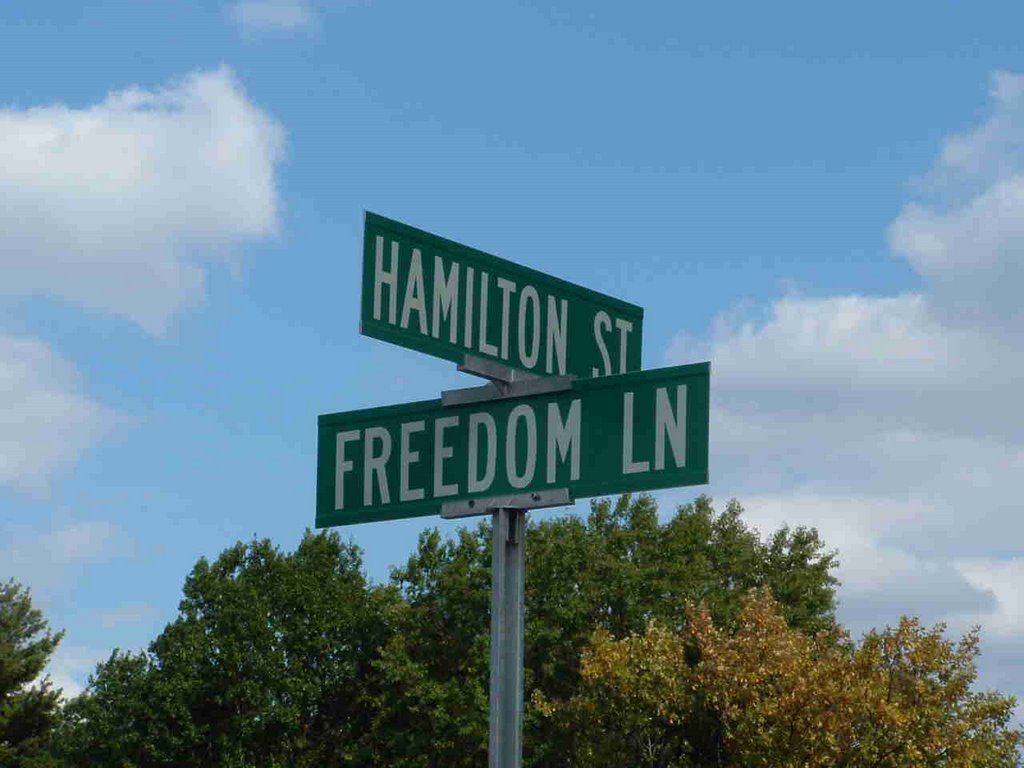 On behalf of the families of the honored soldiers and all the Belleville Sons who perished to pay for our freedom, we'd like to thank former Mayor Gerald DiGori, former Councilman Louis Pallante and former Township Manager Mauro G. Tucci for their efforts in naming these streets to honor the sacrifice of these men and all other veterans.


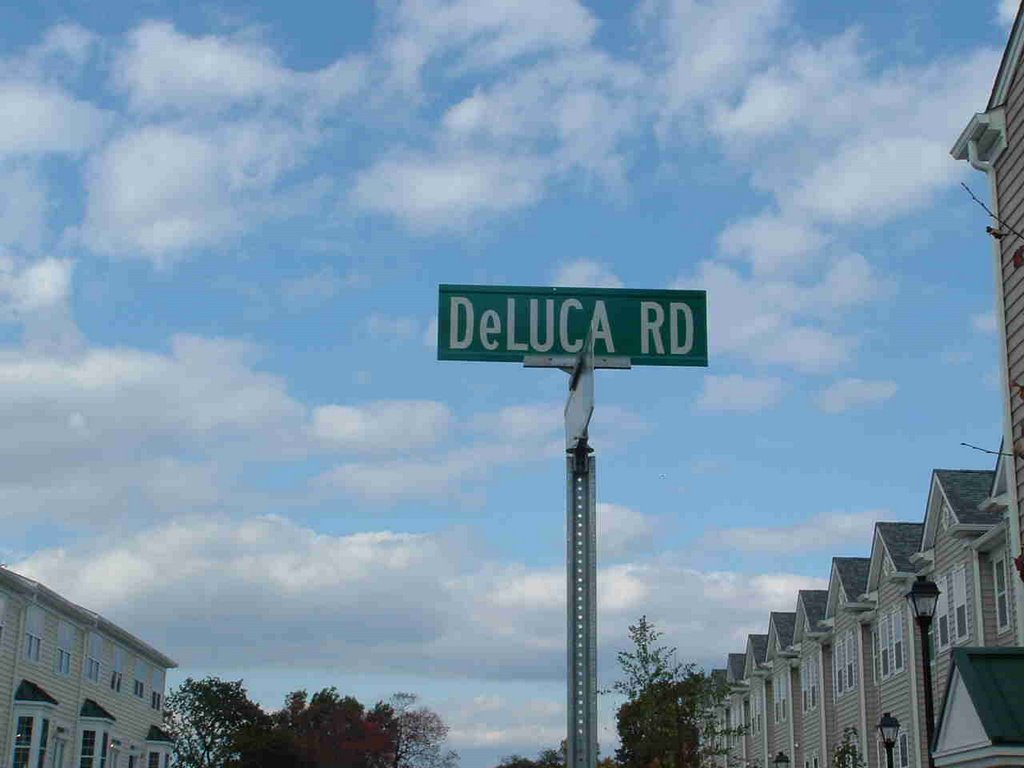
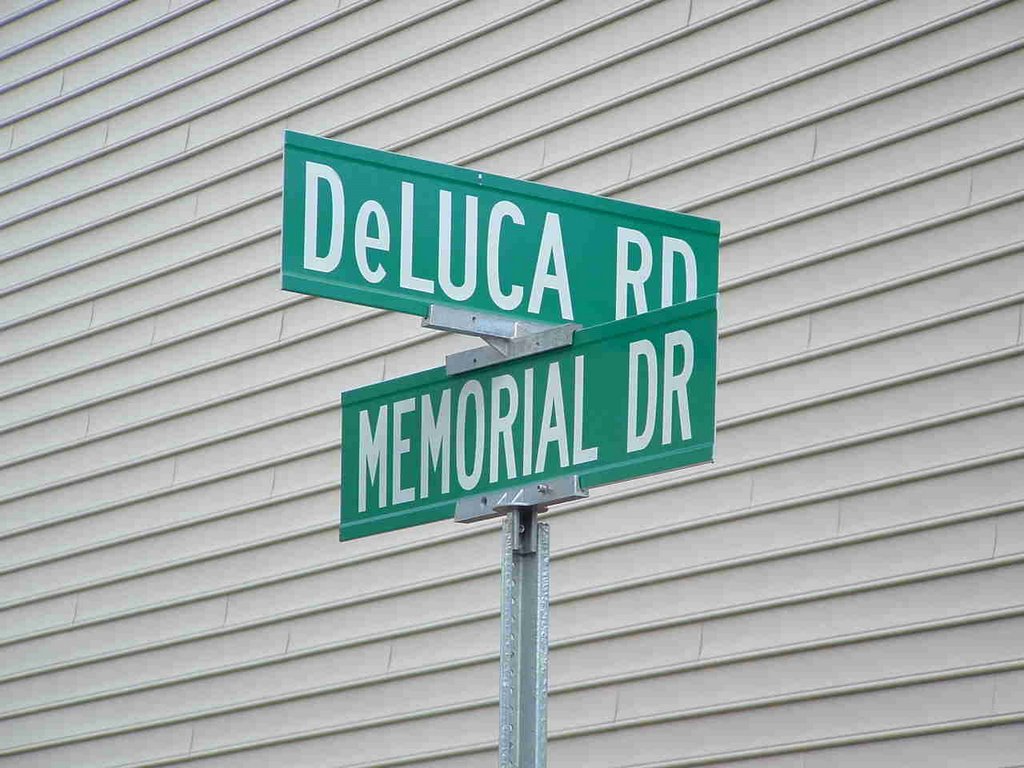
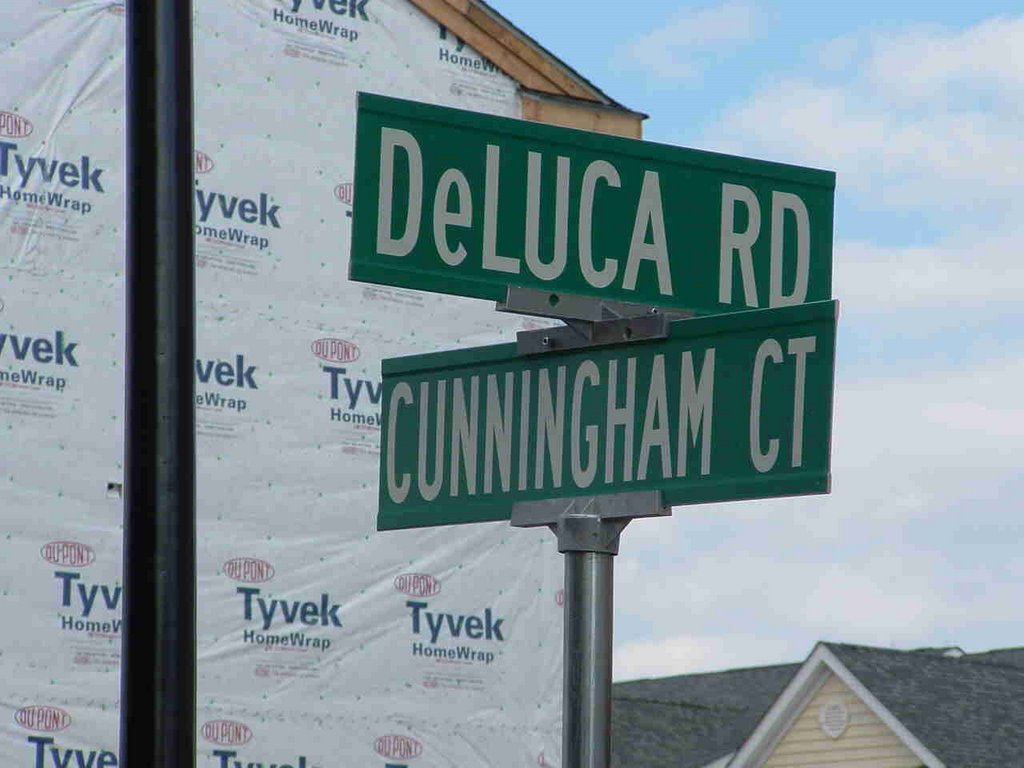
Earlier this year, Tucci notified Centex that in accordance with the Developers Agreement, the town had the right to name the streets and was excercising that right.
Old Name ..... New Name .... Named For
Rebecca Court - Hamilton Street - William Hamilton
Alexander* Court - Cunningham Court - Clatie Cunningham Jr.
Valerie Court - De Luca Road - Raymond De Luca
Kelly Court - Olivio* Drive - Carmine E. Olivo
Grace Court - Memorial Drive
Tami Court - Hero Way
April Court - Freedom Lane
*Alexandra
*Olivo
Copyright © 2006 by Anthony Buccino, all rights reserved. Content may not be used for commercial purposes without written permission.
Belleville Sons Honor Roll
Original Centex Map
Township of Belleville
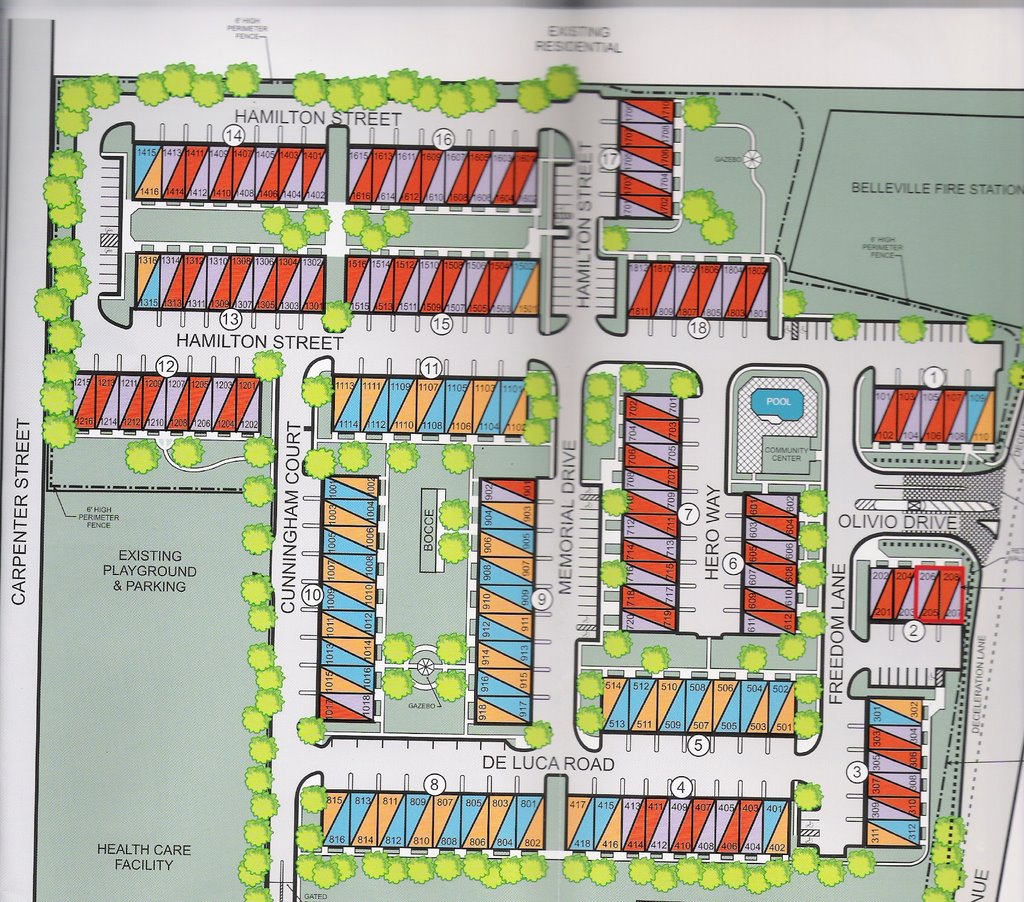 New Essex Park Map
10.09.2006
THE WALL - OCTOBER 2006







The Wall
Copyright © 2006 by Anthony Buccino, all rights reserved. Content may not be used for commercial purposes without written permission. Click on image for larger views.
Belleville Sons Honor Roll
9.26.2006
October Casualties - Belleville Sons
Private George Eyre was killed in action on Oct. 19, 1918. He joined the Army from New Jersey. Pvt. Eyre served with the 312th Infantry Regiment, 78th Infantry Division. He is buried at Plot E, Row 08, Grave 12, at Meuse-Argonne American Cemetery, Romagne, France.
Private George Kalvio, 23, on Oct. 24, 1918
Private First Class William T. Smith was killed in action on Oct. 23, 1918. He joined the Army from New Jersey. Pfc. Smith served with the 312th Infantry Regiment, 78th Infantry Division. He is buried at Plot B, Row 20, Grave 37, at Meuse-Argonne American Cemetery, Romagne, France.
Sgt. Louis Wagner died after an accident in Georgia, on Oct. 2, 1942.
William Gaydos was killed in the Atlantic on Oct. 9, 1943.
Seaman Vincent F. Nucci was KIA Oct. 21, 1943.
2nd Lt. George Skeen died of wounds on Oct. 19, 1944.
Pvt. Giavanni Bocchino was killed in the South Pacific on Oct. 25, 1944.
Pvt. Joseph A. Masi was KIA in France on Oct. 25, 1944.
Pvt. Joseph Zecca was killed in Italy Oct. 29, 1944.
Capt. Louis Jannarone died in Washington, D.C., on Oct. 31, 1944.
Lt. (jg) Edward Joseph Zuczek was lost-at-sea in October 1958. The plane went down at sea off Guam. The lost plane was an AJ5P en route from Guam to Manila. Zuczek, 22, enlisted in the Navy in 1954 and took his flight training at Pensacola Naval Air Training Station, Fla. He was a pilot in a heavy photographic squadron.
Copyright © 2006 by Anthony Buccino, all rights reserved. Content may not be used for commercial purposes without written permission.
Belleville Sons Honor Roll
Private George Kalvio, 23, on Oct. 24, 1918
Private First Class William T. Smith was killed in action on Oct. 23, 1918. He joined the Army from New Jersey. Pfc. Smith served with the 312th Infantry Regiment, 78th Infantry Division. He is buried at Plot B, Row 20, Grave 37, at Meuse-Argonne American Cemetery, Romagne, France.
Sgt. Louis Wagner died after an accident in Georgia, on Oct. 2, 1942.
William Gaydos was killed in the Atlantic on Oct. 9, 1943.
Seaman Vincent F. Nucci was KIA Oct. 21, 1943.
2nd Lt. George Skeen died of wounds on Oct. 19, 1944.
Pvt. Giavanni Bocchino was killed in the South Pacific on Oct. 25, 1944.
Pvt. Joseph A. Masi was KIA in France on Oct. 25, 1944.
Pvt. Joseph Zecca was killed in Italy Oct. 29, 1944.
Capt. Louis Jannarone died in Washington, D.C., on Oct. 31, 1944.
Lt. (jg) Edward Joseph Zuczek was lost-at-sea in October 1958. The plane went down at sea off Guam. The lost plane was an AJ5P en route from Guam to Manila. Zuczek, 22, enlisted in the Navy in 1954 and took his flight training at Pensacola Naval Air Training Station, Fla. He was a pilot in a heavy photographic squadron.
Copyright © 2006 by Anthony Buccino, all rights reserved. Content may not be used for commercial purposes without written permission.
Belleville Sons Honor Roll
9.04.2006
TUSKEGEE AIRMAN LOST OVER GERMANY
(Jan. 18, 1945) -- Flight Officer Leonard R. Willette, 22, was declared killed in action this week.
Willette had been listed as missing in action since Sept. 22.
He is the son of Newark Police Lt. and Mrs. Lawrence Willette, of Stephens Street, Belleville.
The young man enlisted in the Army Air Corps while a student at New York University. He entered the service from New Jersey.
He refused an appointment by the late Senator Barbour to West Point in order to get into active combat more quickly.
Willette received his wings in February 1944, at Tuskegee Army Air Field, Ala.
He was a P-51 Mustang pilot based in Italy with the famed 99th Fighter Squadron, 322nd Fighter Group, under command of Col. Benjamin O. Davis.
Willette had been listed as missing in action since Sept. 22.
He is the son of Newark Police Lt. and Mrs. Lawrence Willette, of Stephens Street, Belleville.
The young man enlisted in the Army Air Corps while a student at New York University. He entered the service from New Jersey.
He refused an appointment by the late Senator Barbour to West Point in order to get into active combat more quickly.
Willette received his wings in February 1944, at Tuskegee Army Air Field, Ala.
He was a P-51 Mustang pilot based in Italy with the famed 99th Fighter Squadron, 322nd Fighter Group, under command of Col. Benjamin O. Davis.
7.25.2006
BATAAN DEATH MARCH SURVIVOR TALE
Survivor of Bataan Death March Comes Home
Sgt. Michael Tortoriello, prisoner of Japs
Three-and-a-half-years, reveals horror tale;
Served seven years in Army
The phone rang in the home of Mr. and Mrs. Carmine Tortoriello of 88 Baldwin Place, Oct. 29, 1945, and Mrs. Tortoriello, answering the ring, heard a voice say: “Hello, Mom. This is Michael.”
It was a voice Mrs. Tortoriello had not heard in seven long, anxious years, for Sgt. Mike Tortoriello was one of the survivors of the infamous Bataan Death March, and a Jap prisoner from April 9, 1942, to Sept. 17, 1945.
After going through years of torture, hardship and marked with death in its most horrid form, Mike is remarkably quiet and cool. Instead of a highly nervous, neurotic individual, which would be expected, he is restrained, but talks without hesitancy, showing an unusual capacity for remembering names, dates and places.
But the ordeal will never be forgotten, said Mike. Two little scars appear on each side of his cheeks, put there by Jap cigarette butts, one of their favorite forms of torture.
Captured one day after the fall of Bataan, Mike had been trying to reach the guerilla troops when Jap tanks caught up with he and several of his buddies. Then began a chain of horrendous nights and days.
FOUR DAYS MARCH IN SUN
For four days and nights the American soldiers and their Philippine cohorts were forced to march during the day under a blistering, tropical sun and at night with a ten minute rest period the only break along the torturous path. Men, driven crazy by thirst, ran off the road to attempt to reach one of the many artesian wells along the route, but were shot, clubbed or bayoneted to death by the brutal Jap guards.
“I kept a small pebble in my mouth, and kept rolling it around,” said Tortoriello. “One instance I remember very well, in trying to get some water. We had reached Camp O’Donnell, a former American camp, and two Americans approached a Jap guard, and by using sign language asked if they could fill several canteens with water. The guard said to go ahead, and they disappeared into the undergrowth. That was the last we ever heard of them. Several Japs went into the bushes after them, while they were filling canteens, and killed both soldiers.”
It was at O’Donnell that more than 32,000 Philippines died and several thousand Americans. A Jap commander, who sported a handlebar moustache, lined the survivors up, and through an interpreter, informed them there was no medicine available for them, and the sick would have to die. The Japs buried the dead in holes about two feet deep, and piled as many as twenty men in these holes, and then threw dirt on the pile. Along would come a rainstorm, wash away the dirt from the bodies and the wild dogs could be heard having a feast at night on the remains.
Then came Camp Cabanatuan in the Philippines. Upon reaching this side, in what was to become one of the famous Jap prisoner-of-war-camps, that more atrocities were committed.
MAKE CAMP LIVABLE
“We had to clean the place up,” said Mike, “there was high grass all around and some dilapidated shacks that were falling apart. We built makeshift roads and constructed more livable quarters. When we first arrived, the Japs put up a fence with only a single strand of barbed wire. So many of the boys escaped, that the little men created the ‘shooting squads.’ The prisoners were divided into groups of ten, and if any one of them escaped, the others would be killed. We thought they were kidding, but one of the boys escaped, and the nine men left were all shot to death.”
Tortoriello, when questioned about the food, related they were given 700 grams of rice a day. The Japs had a trick of filling bags of sand, piling them up with a few sacks of rice on top, and when the officer-in-charge of war prisoners made an inspection trip, he was shown the bags piled up, and what he thought was rice, was principally sand.
“We had gardens,” said Mike, “but when there are 6,000 hungry men, and after eh Japs got through confiscating a lot of the stuff we rised (sic), there wasn’t much to go around.”
In July 1944, the prisoners were shipped to Japan. Upon hearing of the move, the men were struck with the idea they would be better off, for they had heard that the prisoners in Japan at least had the benefit of the Red Cross packages. But conditions were very bad in Japan and they found they had been moved from the frying pan into the fire.
MEN CROWDED IN FREIGHTER
“There were 1,500 men crowded into the hold of this small Jap freighter going over,” said Tortoriello, “and there was no sanitary facilities. We were in a convoy, right in the center, guarded by two carriers and a number of destroyers. But several days before we made port, I had occasion to go on the deck to use the only facility they made available for us. It was about two o’clock in the morning, and suddenly I saw through the cracks in the shack, four distinct flashes over the horizon. Our ship was going like mad, and we later learned that American subs had nailed two tankers and two freighters.”
On August 4, 1944, the prisoners were marched into Camp Yawata, near the city of Moji, on the island of Kyushu. Shortly after arriving there, Tortoriello and some of his buddies were put to work in a steel mill, and then began the real battle of survival.
Sixteen hours a day, for three weeks straight, was the working schedule, and then came one day of rest. Mike operated an electric hammer and between dodging bombs from Yank B-29s and dipping into the Jap black market, became quite proficient in the language.
BLACK MARKET IN EVERYTHING
“The government controlled all the food, and you could not buy any in a store,” he said, “consequently, there was black market in everything. Some of the extra clothing we had went into the market in exchange for soy beans, salt and money. We smuggled clothes out and food back in, but we were caught many times. Then came a little beating. One of the favorite tricks was the Water Cure. They put a hose in your mouth and loaded you up with water. Then when your stomach began to distend, they would jump on it or punch you.”
The men were supposed to be paid for their work, but received practically nothing, as their money was just about worthless. The men learned that a plan had been drawn up in Tokyo to kill all the prisoners-of-war in the event of an invasion, and were kept on edge with this thought staring them in the face.
Then, one day a B-29 appeared and dropped a parachute with a package of food, and Mike said he never thought C and K rations could taste so good.
FLOWN HOME AFTER LIBERATION
The men were brought to Okinawa, after being released by American liberation troops, and from there (he) was flown home. Down to 125 pounds, Tortoriello was treaded for malnutrition and most recently had been at the Rhoadea General Hospital in Utica, N.Y., before being released.
Sgt. Tortoriello was attached to the Air Force , and is now enjoying a 104-day furlough, upon completion of which he will go to California to be discharged.
A graduate of Bloomfield, Tortoriello was a star football player, playing in ’36 and ’37. He was employed at General Motors in Bloomfield, prior to enlisting in the Army for a two-year stretch in 1939.
Courtesy: The Belleville Times
Copyright © 2006 by Anthony Buccino, all rights reserved. Content may not be used for commercial purposes without written permission.
Belleville Sons Honor Roll
Sgt. Michael Tortoriello, prisoner of Japs
Three-and-a-half-years, reveals horror tale;
Served seven years in Army
The phone rang in the home of Mr. and Mrs. Carmine Tortoriello of 88 Baldwin Place, Oct. 29, 1945, and Mrs. Tortoriello, answering the ring, heard a voice say: “Hello, Mom. This is Michael.”
It was a voice Mrs. Tortoriello had not heard in seven long, anxious years, for Sgt. Mike Tortoriello was one of the survivors of the infamous Bataan Death March, and a Jap prisoner from April 9, 1942, to Sept. 17, 1945.
After going through years of torture, hardship and marked with death in its most horrid form, Mike is remarkably quiet and cool. Instead of a highly nervous, neurotic individual, which would be expected, he is restrained, but talks without hesitancy, showing an unusual capacity for remembering names, dates and places.
But the ordeal will never be forgotten, said Mike. Two little scars appear on each side of his cheeks, put there by Jap cigarette butts, one of their favorite forms of torture.
Captured one day after the fall of Bataan, Mike had been trying to reach the guerilla troops when Jap tanks caught up with he and several of his buddies. Then began a chain of horrendous nights and days.
FOUR DAYS MARCH IN SUN
For four days and nights the American soldiers and their Philippine cohorts were forced to march during the day under a blistering, tropical sun and at night with a ten minute rest period the only break along the torturous path. Men, driven crazy by thirst, ran off the road to attempt to reach one of the many artesian wells along the route, but were shot, clubbed or bayoneted to death by the brutal Jap guards.
“I kept a small pebble in my mouth, and kept rolling it around,” said Tortoriello. “One instance I remember very well, in trying to get some water. We had reached Camp O’Donnell, a former American camp, and two Americans approached a Jap guard, and by using sign language asked if they could fill several canteens with water. The guard said to go ahead, and they disappeared into the undergrowth. That was the last we ever heard of them. Several Japs went into the bushes after them, while they were filling canteens, and killed both soldiers.”
It was at O’Donnell that more than 32,000 Philippines died and several thousand Americans. A Jap commander, who sported a handlebar moustache, lined the survivors up, and through an interpreter, informed them there was no medicine available for them, and the sick would have to die. The Japs buried the dead in holes about two feet deep, and piled as many as twenty men in these holes, and then threw dirt on the pile. Along would come a rainstorm, wash away the dirt from the bodies and the wild dogs could be heard having a feast at night on the remains.
Then came Camp Cabanatuan in the Philippines. Upon reaching this side, in what was to become one of the famous Jap prisoner-of-war-camps, that more atrocities were committed.
MAKE CAMP LIVABLE
“We had to clean the place up,” said Mike, “there was high grass all around and some dilapidated shacks that were falling apart. We built makeshift roads and constructed more livable quarters. When we first arrived, the Japs put up a fence with only a single strand of barbed wire. So many of the boys escaped, that the little men created the ‘shooting squads.’ The prisoners were divided into groups of ten, and if any one of them escaped, the others would be killed. We thought they were kidding, but one of the boys escaped, and the nine men left were all shot to death.”
Tortoriello, when questioned about the food, related they were given 700 grams of rice a day. The Japs had a trick of filling bags of sand, piling them up with a few sacks of rice on top, and when the officer-in-charge of war prisoners made an inspection trip, he was shown the bags piled up, and what he thought was rice, was principally sand.
“We had gardens,” said Mike, “but when there are 6,000 hungry men, and after eh Japs got through confiscating a lot of the stuff we rised (sic), there wasn’t much to go around.”
In July 1944, the prisoners were shipped to Japan. Upon hearing of the move, the men were struck with the idea they would be better off, for they had heard that the prisoners in Japan at least had the benefit of the Red Cross packages. But conditions were very bad in Japan and they found they had been moved from the frying pan into the fire.
MEN CROWDED IN FREIGHTER
“There were 1,500 men crowded into the hold of this small Jap freighter going over,” said Tortoriello, “and there was no sanitary facilities. We were in a convoy, right in the center, guarded by two carriers and a number of destroyers. But several days before we made port, I had occasion to go on the deck to use the only facility they made available for us. It was about two o’clock in the morning, and suddenly I saw through the cracks in the shack, four distinct flashes over the horizon. Our ship was going like mad, and we later learned that American subs had nailed two tankers and two freighters.”
On August 4, 1944, the prisoners were marched into Camp Yawata, near the city of Moji, on the island of Kyushu. Shortly after arriving there, Tortoriello and some of his buddies were put to work in a steel mill, and then began the real battle of survival.
Sixteen hours a day, for three weeks straight, was the working schedule, and then came one day of rest. Mike operated an electric hammer and between dodging bombs from Yank B-29s and dipping into the Jap black market, became quite proficient in the language.
BLACK MARKET IN EVERYTHING
“The government controlled all the food, and you could not buy any in a store,” he said, “consequently, there was black market in everything. Some of the extra clothing we had went into the market in exchange for soy beans, salt and money. We smuggled clothes out and food back in, but we were caught many times. Then came a little beating. One of the favorite tricks was the Water Cure. They put a hose in your mouth and loaded you up with water. Then when your stomach began to distend, they would jump on it or punch you.”
The men were supposed to be paid for their work, but received practically nothing, as their money was just about worthless. The men learned that a plan had been drawn up in Tokyo to kill all the prisoners-of-war in the event of an invasion, and were kept on edge with this thought staring them in the face.
Then, one day a B-29 appeared and dropped a parachute with a package of food, and Mike said he never thought C and K rations could taste so good.
FLOWN HOME AFTER LIBERATION
The men were brought to Okinawa, after being released by American liberation troops, and from there (he) was flown home. Down to 125 pounds, Tortoriello was treaded for malnutrition and most recently had been at the Rhoadea General Hospital in Utica, N.Y., before being released.
Sgt. Tortoriello was attached to the Air Force , and is now enjoying a 104-day furlough, upon completion of which he will go to California to be discharged.
A graduate of Bloomfield, Tortoriello was a star football player, playing in ’36 and ’37. He was employed at General Motors in Bloomfield, prior to enlisting in the Army for a two-year stretch in 1939.
Courtesy: The Belleville Times
Copyright © 2006 by Anthony Buccino, all rights reserved. Content may not be used for commercial purposes without written permission.
Belleville Sons Honor Roll
5.30.2006
CAPTAIN ABRAHAM SPEER
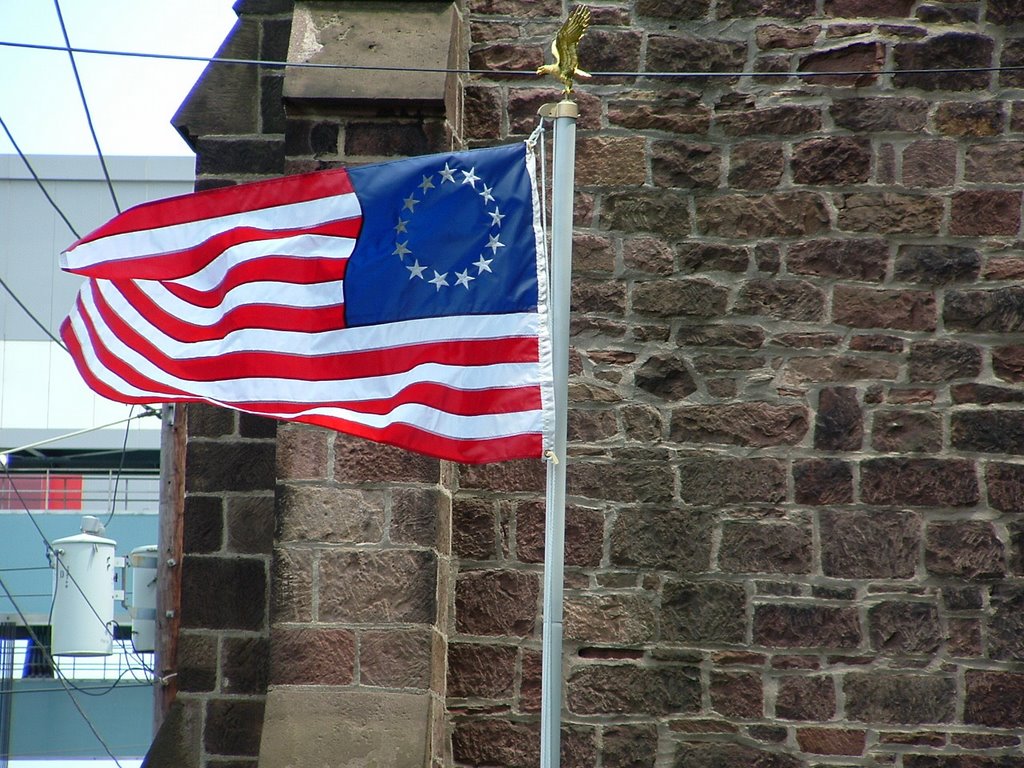
The most striking figure that we can summon from dim colonial times in this farm and woodland region is the young Dutchman Abram Speer.
He was the eldest of five sons of John Speer of Second River, who owned a large estate in the center of that village and who was a descendant of John Hendrick Speer, an original grantee near Hackensak and also one of the Acquackanonck patentees.
Abram (or Abraham) came over Third River seeking a wife. He found her in the daughter of one Wouterse or Wouters who had a blacksmith shop at Povershon.
He was commissioned Captain in the Second Essex Regiment on May 28, 1777, and stationed at Belleville with this company to "guard the river."
It was his father who from the church steeple shot the "refugee" across the Passaic.
There was another flight of soldiery through this region in 1778, after the battle of Monmouth, when the British were running before the Americans to reach the Hudson.
Skirmishes took place at Belleville and at the restored Acquackanonck Bridge, the red coats escaping across it in the darkness.
SOURCE: HISTORY OF NUTLEY, Elizabeth Stow Brown, 1907, The Retreat Across the Jerseys
NOTES: Belleville at the time of the American Revolution was known as Second River. Washington's retreat route is marked along the path his troops took in town.
Subscribe to:
Posts (Atom)